Columbia Law School

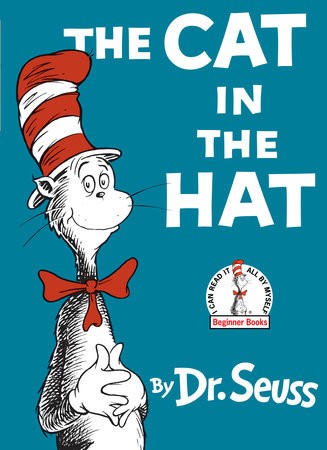
In 1957, Theodor S. Geisel, or “Dr. Seuss,” published The Cat in the Hat. In 1995, four years after Geisel’s death, defendants Penguin Books (“Penguin”) and Dove Audio (“Dove”) respectively published and distributed a satire of the O.J. Simpson murder trial—The Cat NOT in the Hat!—written by Alan Katz and illustrated by Chris Wrinn. Dr. Seuss Enterprises (“Seuss”), which owned most of the late Geisel’s copyrights, sued for copyright infringement, arguing The Cat NOT in the Hat! was an unauthorized derivative work. The district court granted Seuss a preliminary injunction, finding a strong likelihood of infringement, and that the defendants’ fair use defense was unlikely to succeed. Penguin and Dove appealed, but the appellate court upheld the injunction. It ruled the book was not a parody “in the legal sense” because it did not critique or “ridicule” The Cat in the Hat in substance but merely mimicked its stylistic elements. The appellate court found that the book’s commercial nature, lack of transformativeness, and heavy use of protected elements weighed against fair use. The appellate court accordingly upheld the district court’s preliminary injunction.
Author and illustrator Theodor S. Geisel, also known as “Dr. Seuss,” published The Cat in the Hat in 1957. The story became one of Geisel’s most recognizable works, yielding several sequels that all focused on the eponymous protagonist, the Cat in the Hat.
In 1995, four years after Geisel’s death, defendants Penguin Books (“Penguin”) and Dove Audio (“Dove”) respectively published and distributed a satire of the O.J. Simpson murder trial—The Cat NOT in the Hat!—written by Alan Katz and illustrated by Chris Wrinn.
Plaintiff Dr. Seuss Enterprises (“Seuss”) owned the intellectual property rights to most of the late Geisel’s work and, upon seeing an advertisement for the yet-unreleased work, filed a complaint for copyright infringement against Penguin and Dove. Seuss alleged that Penguin and Dove created unauthorized derivative works of The Cat in the Hat and four spin-off books: The Cat in the Hat Comes Back, The Cat’s Quizzer, The Cat in the Hat Beginner Books Dictionary, and The Cat in the Hat’s Song Book. Seuss also applied for a temporary restraining order and preliminary injunction to prevent the allegedly infringing work’s release.
In response, Katz submitted a declaration to the district court “that The Cat in the Hat was the ‘object for [his] parody’ and portions of his book derive from The Cat in the Hat only as ‘necessary to conjure up the original.’”
The district court denied Seuss’ request for a temporary restraining order but granted a hearing date for the preliminary injunction. Penguin and Dove nonetheless continued with the production schedule of The Cat NOT in the Hat! and printed 12,000 books for approximately $35,500. Seuss then amended its request for injunctive relief to incorporate two additional Dr. Seuss texts—Horton Hatches the Egg and One Fish Two Fish Red Fish Blue Fish—as bases for its infringement claims.
The district court subsequently granted Seuss its requested preliminary injunction. Penguin and Dove filed a motion for reconsideration, and Katz submitted a second declaration in which he admitted to “drawing from” the two additional Dr. Seuss texts. The district court maintained its preliminary injunction but modified its order in light of the new claims, finding a strong likelihood that substantial protected expression was taken from The Cat in the Hat but not from the other two Dr. Seuss texts, as well as a strong likelihood of Seuss’s success on (1) the copyright claim raising a presumption of irreparable harm, and (2) the issue of parody as fair use.
Penguin and Dove appealed. The appellate court applied a standard of review under which it could only reverse the preliminary injunction if it found that “the district court abused its discretion or based its decision on an erroneous legal standard or on clearly erroneous findings of fact.”
First, the appellate court concluded that the district court’s findings that Penguin and Dove infringed on Seuss’s copyrights were not clearly erroneous.
The appellate court used a modified test rooted in Sid & Marty Krofft Television Prods., Inc. v. McDonald’s Corp. (9th Cir. 1977) to demonstrate “substantial similarity.” The first Krofft question—often called the “extrinsic” test—objectively examines substantial similarities in both ideas and expression, and it allows for a separated analysis of a work’s various elements, or “analytic dissection.” The second Krofft question—also known as the “intrinsic” test—does not allow for analytic dissection, instead subjectively considering whether “an ‘ordinary reasonable person’ would perceive a substantial taking of protected expression” when examining the works as a whole.
Penguin and Dove argued that The Cat NOT in the Hat! only used elements of Seuss’s work that were either uncopyrightable or fell within the public domain. Penguin and Dove specifically claimed that: (1) titles of a parody cannot be a basis of infringement because statutory construction and court precedent dictates that titles cannot receive copyright protection; (2) Congress has declined to afford copyright protection to font designs; (3) the poetic meter used in The Cat in the Hat—the anapestic tetrameter—is not protected by copyright, just as the more popular iambic pentameter is not protected; (4) Dr. Seuss’s “whimsical poetic style that employs neologisms and onomatopoeia” is uncopyrightable; and (5) exclusive ownership cannot exist in a “visual style of illustration using line drawing, coloring, and shading techniques similar to those used in The Cat in the Hat.”
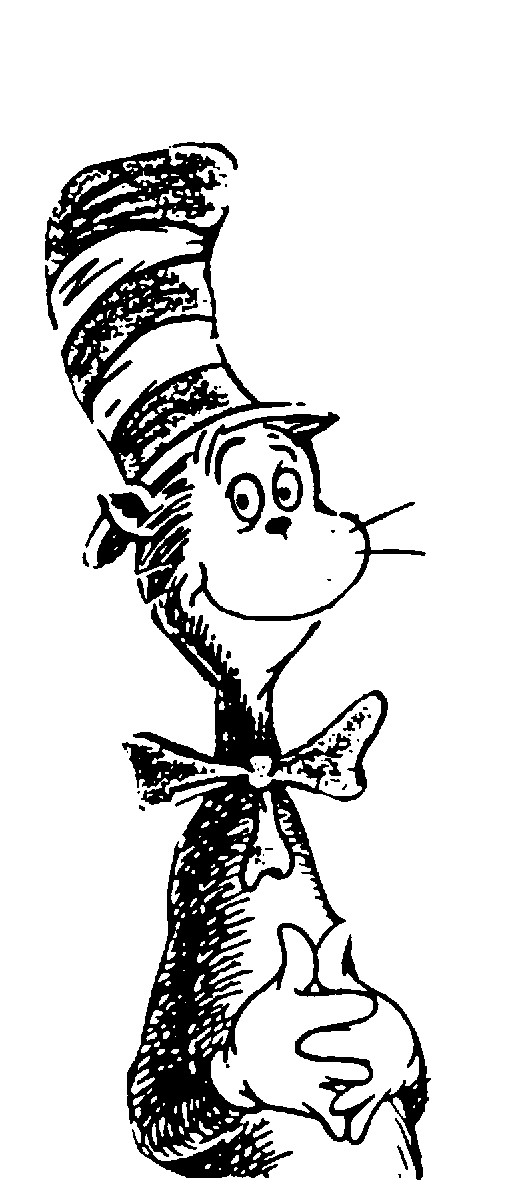
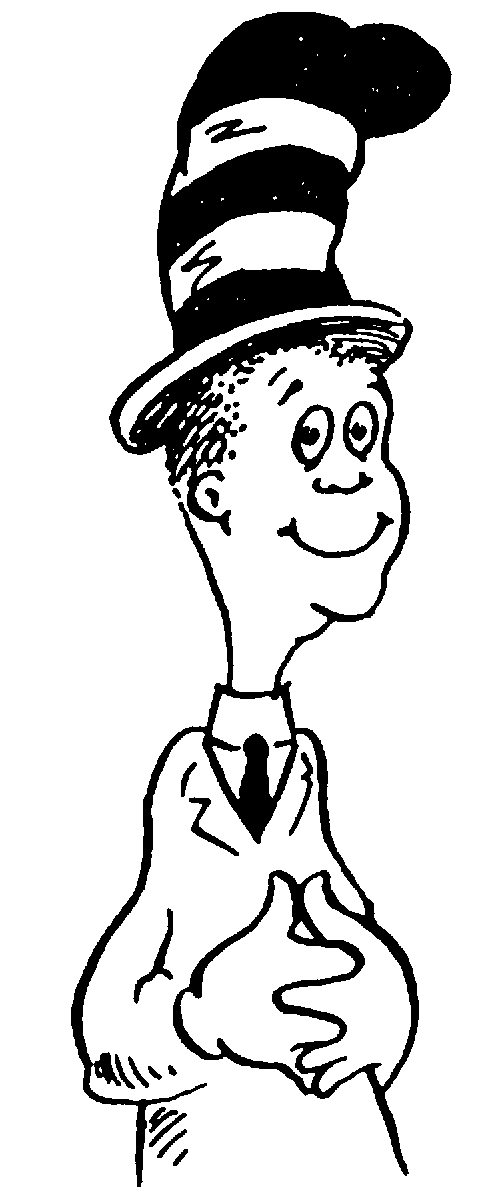
The appellate court rejected all five arguments in the context of the second, subjective Krofft question because analytic dissection is not permitted at that stage. Regarding the first, objective Krofft question, however, the appellate court noted that The Cat NOT in the Hat! appropriated the Cat in the Hat character in an illustration on the back cover, as well as the character’s distinct hat on the front cover and various times throughout the text itself. The injunction was not granted on the basis of title, font, meter, or style—and thus not clearly erroneous.
Next, Penguin and Dove claimed that even if copyrighted material was demonstrably taken, any such taking should be “excused as parody under the fair use doctrine.” The appellate court subsequently analyzed each of the four fair use factors, holding that the district court was not clearly erroneous in its finding that Penguin and Dove would be unlikely to succeed in establishing a fair use defense.
First, the appellate court found that The Cat NOT in the Hat! was not a parody “in the legal sense” because the underlying copyrighted work must be “at least in part the target of the defendant’s satire,” and here, the work merely mimicked but did not critique or “ridicule” Dr. Seuss’s style. The appellate court further noted that Katz and Wrinn only used elements of The Cat in the Hat—e.g. the narrator “Dr. Juice” and the Cat’s red and white stove-pipe hat depicted atop O.J. Simpson’s head—to “get attention” or “to avoid the drudgery in working up something fresh,” with the appellate court borrowing the latter quoted language from the Supreme Court’s opinion in Campbell v. Acuff-Rose Music, Inc. (1994). Furthermore, “the substance and content of The Cat in the Hat is not conjured up” by the book’s subject, O.J. Simpson’s alleged crimes and trial. The appellate court also noted that the commercial use of The Cat NOT in the Hat! cut against Penguin and Dove’s fair use defense because there was “no effort to create a transformative work with ‘new expression, meaning, or message.’”
The appellate court found that while the second factor—which deals with “the nature of the copyrighted work”—is relatively insignificant compared to other factors, “the creativity, imagination, and originality embodied in The Cat in the Hat and its central character tilts the scale against fair use.”
Regarding the third factor, which focuses on reasonableness of “the amount and substantiality of the portion used in relation to the copyrighted work as a whole,” the appellate court rejected Penguin and Dove’s explanation of why “evoking the world” of The Cat in the Hat was necessary to “comment on the mix of frivolousness and moral gravity that characterized the culture’s reaction to events surrounding the Brown/Goldman murders.” The appellate court agreed with the district court in that Penguin and Dove’s explanation was “pure shtick” and “unconvincing.”
The fourth and final fair use factor considers how The Cat NOT in the Hat! affects “the potential market for or value of the copyrighted work.” The appellate court found that because Penguin and Dove’s use was commercial and not transformative, market substitution was “at least more certain,” and market harm could be “more readily inferred.”
After evaluating the merits of Seuss's copyright claims, as well as the fair use factors, the appellate court ultimately affirmed the district court’s preliminary injunction, which prohibited the publication and distribution of The Cat NOT in the Hat! by Penguin and Dove.
The parties then settled: the parties stipulated to dismiss Seuss’s complaint and the parties entered into a permanent injunction barring the Penguin defendants from ever publishing The Cat NOT in the Hat!.
District Court Opinion (with appendix of comparative images)
The Cat NOT in the Hat! - Internet Archive